What We Do
The Role of A Building Designer
Building a new home or starting a major renovation is an exciting milestone, but it often comes with many daunting questions. At New England Design Group, we provide the expert guidance and practical design solutions needed to answer those questions and get your project off the ground.
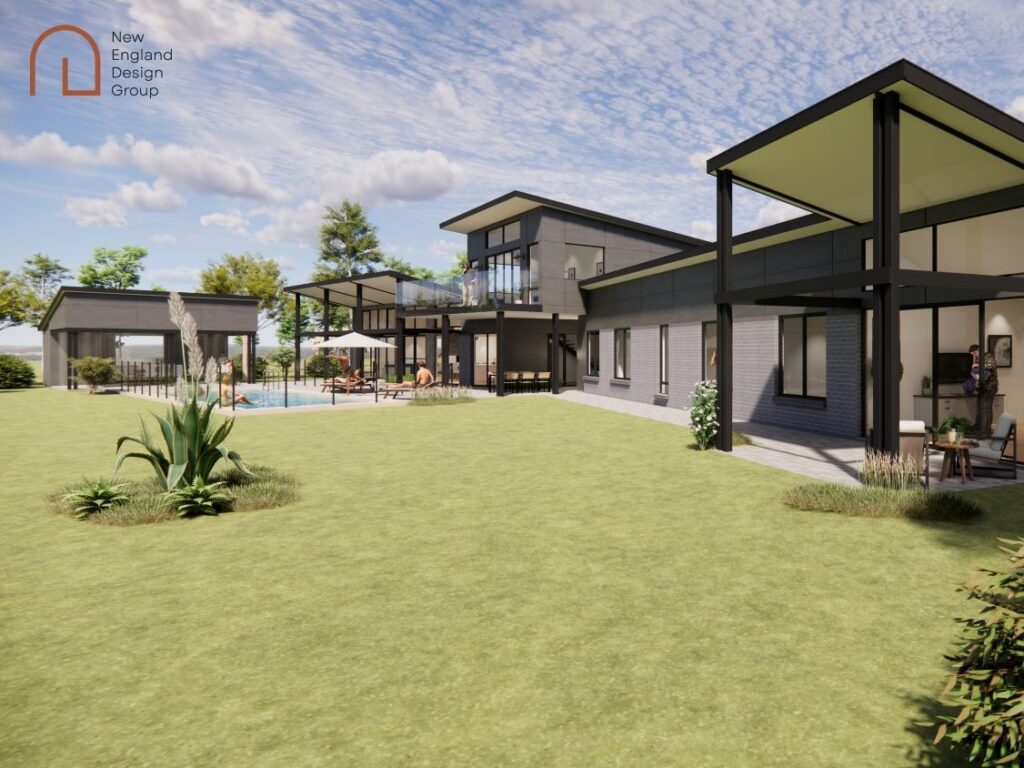
Let us help with your new home or renovation – What we
offer
Before deciding to build a new home or renovate your existing home, there are a few things to consider.
- Is my budget adequate for what I want and hope to achieve?
- How do I organise the rooms for best access to sun in winter and cooling breezes in
summer? - Will the local council cause me any grief if I do what I want to do with my project?
- How do I make sure the builder will stick to his quoted price and not hit me with variations
during the project?
If you’ve asked yourself any of these questions, you probably should seek advice from an architect or building designer before starting your project.
So, should you speak with an architect or a building designer? What is the difference between the two?
Essentially both offer the same level of expertise when it comes to developing a design from a brief – an architect usually has received far more formal training in design, where a building designer will often have more practical experience in designing to a budget. If you want to build a multi-storey office or unit block, talk to an architect; if you want to build a suburban cottage or do a small extension to your house, you could talk to either, but the building designer would probably offer the service more economically.
A building designer provides creative and practical design services that turn a client’s needs and site potential into buildable, attractive buildings. They deliver inspired design solutions that balance aesthetics, functionality and context—maximizing natural light, flow, materials and curb appeal while reflecting the client’s brief.
Working within a budget is central: the designer develops cost‑aware options, prioritizes value-driven materials and detailing, and refines scope to meet financial targets without compromising key design goals. They bring up‑to‑date knowledge of building codes, current regulations and local council development controls, ensuring proposals are compliant and reducing the risk of costly redesigns or delays.
Services include preparation of accurate, scaled drawings and documentation required for development applications and construction approvals (site plans, floor plans, elevations, sections, construction details and specification notes). For construction, the designer produces coordinated working drawings and schedules that communicate sufficient detail—dimensions, materials, joinery, structural interfaces and service locations—so builders can provide reliable, competitive fixed-price tenders and avoid confusion during the build – confusion that always leads to extra unforeseen costs.
When you first meet with the building designer you will probably have prepared a sketch of how you want the rooms arranged to suit your lifestyle, whether it’s a new house or a renovation / extension. You may even have prepared some drawings yourself and the local authorities have told you that you need to provide more information. At New England Design Group, we will review your sketches in our initial meeting, talk about what you hope to achieve with the project within your budget, advise what you face in terms of council development controls and building regulations and can probably let you know straight away whether what you hope for your project is achievable or needs some more attention. From our discussions we will prepare a brief of what is required to be achieved from the project. We will then prepare a fee estimate for you based on the brief and your budget. We will also advise whether you will need to engage other consultants to help get all the documentation you will need before you can start building, all of which we can organise for you.
We start the design process in a couple of initial steps – site inspection and review of what is permissible with development of the site. The site inspection can also include measuring any existing buildings on the site and, if there is no formal survey available, documenting some critical site levels. A review of local council and state development controls will reveal if there are any impediments to the project requirements – these will be noted and we will advise you of possible workarounds. Now we can start the design in earnest.
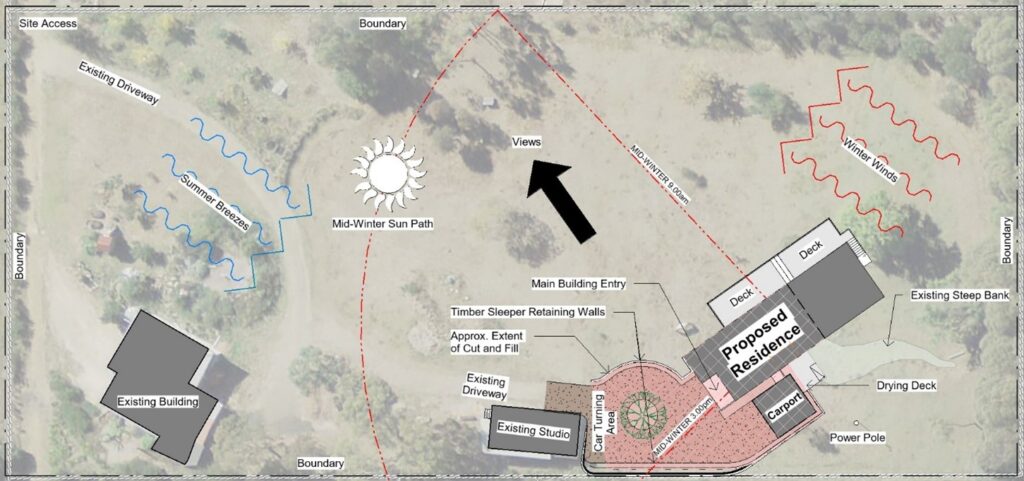
If it’s a new building, the first step in the design process is determining the best location for the building on site, to get the most from the site constraints. We consider the following 6 criteria as the site constraints:
- solar access,
- breeze control,
- views,
- vehicle access,
- drainage and
- privacy
If we’re proposing alterations and additions to an existing residence, we would also take these factors into consideration. You may have provided a sketch of how you would like the rooms arranged – this is good and provides us with a valuable place to start the design. We may make some recommendations to modify the design to suit the site context, while still maintaining the flow required within the building.
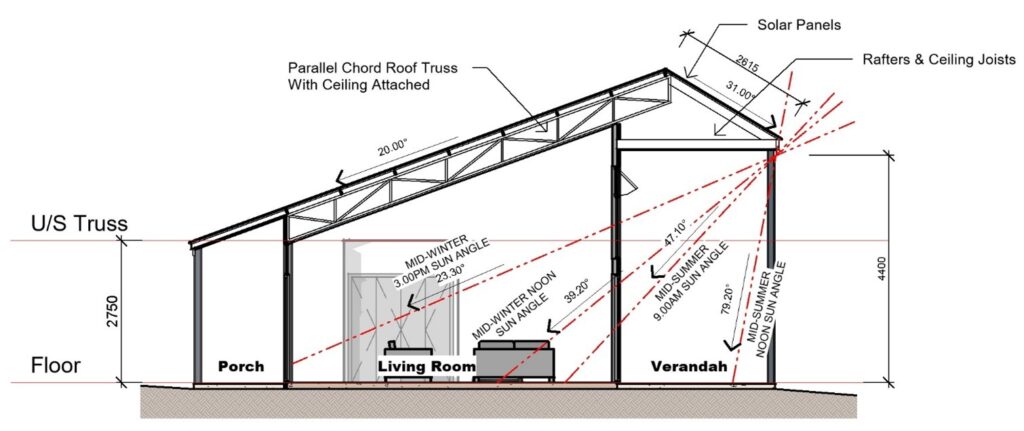
The design starts with a site plan and a floor plan, and maybe a notional building sketch section. We call this the Schematic Design Phase. The site plan is intended to clarify the correct location of the building on the site to satisfy the site constraints. The floor plan works with your provided sketch and/or the development brief and formalises the room layouts and relationships between living, sleeping, cooking, bathing, storage and circulation areas to get the most benefit from the site constraints. An indicative sketch section may also be required to explain how things like best solar access, breeze control, taking in the views and achieving privacy from your neighbours can be achieved.
At our first design review meeting, we review the schematic design and discuss possible modifications. We then make those requested modifications and reissue the drawings to you for approval of the site layout and floor plan. We also discuss in our meeting the level of finishes and fixtures / fittings you are hoping to achieve within your budget. These are noted and on reissue of the schematic design we will advise whether the level of finishes and fixtures / fittings can be achieved, and, if not, make alternative recommendations.
From there, we proceed with design development to formalise the overall building design in a set of plans, elevations, building sections and perspective images. We call this the Concept Design Phase of the project. At our second design review meeting, we present the concept design as a computer model, through which we can take you on a virtual tour on either our large screen monitor or virtual reality headsets. Our visualisation tools allow you to fully immerse yourself within the design and make recommendations for further developing the design to suit your taste and budget. We take your recommendations on board and modify the design to suit your requirements.
Now that the building design has been developed to your satisfaction, it’s time to get approval from the relevant authorities to build. For this we will need drawings, compliance certificates and a construction specification. We call this the Documentation Phase of the project. We as building designers cannot provide all the documentation necessary to get approvals from the relevant authorities to build. This is where the need for other consultants comes in. Depending on the scale of the project, you may need the assistance of:
- a Structural Engineer,
- a Civil Engineer,
- a Thermal Performance Assessor,
- a Bushfire Risk Assessor, and
- specialised engineering for Electrical, Hydraulics, Air-Conditioning & Mechanical Ventilation.
We at New England Design Group regularly work with a team of consultants who can provide these services, and we will advise which, if any, are needed and organise their services for you.
Before you can have a builder commence work on your project you will need to obtain some approvals from the “powers that be”. You will need approval from the local council to undertake the development and also to connect to council’s infrastructure (water supply and sewer and stormwater disposal). You will also need to have the building design certified as meeting all the necessary requirements of the Building Code of Australia (National Construction Code) before you can start building. Compiling all the necessary drawings and documentation needed for these approvals is what we call the Documentation Phase of the project.
New England Design Group takes the headache out of all the approvals you need to obtain. We lodge all necessary applications on your behalf and answer any questions the individual approvals organisations may have in order to get you the required approvals. We cover all the administration costs of obtaining the approvals, all we ask is that you pay the fees for the approvals. We call this the Approvals Phase of the project.
Getting your design to Builders for pricing and construction
With the relevant development and building approvals obtained you can now obtain a quote from a builder (if you haven’t got one already). The drawings and specifications issued for construction approval will be sufficient information for a builder to provide you with a budget construction cost estimate / quote. Depending on the complexity of the project, this level of information may be all you need for a builder to provide you with a firm quote and you may not need any more assistance from us. But if there are specific design elements that require particular attention to ensure a firm quote, additional drawings and details may be required.
If you would like New England Design Group to obtain quotes from various builders on your behalf, we can do that for you and we call this the Tender Phase of the project. We issue all the construction documentation to a number of builders on your behalf and answer any queries from the builders as they put a construction price together. We then receive all the tenders and make sure they have all addressed the scope of the project correctly and provide you with a breakdown of each tender price. You can then accept whichever tender you prefer.
We can also, if required, administer the construction contract on your behalf. This involves having regular meetings with the builder on site, inspecting the work in progress, negotiating with the builder for any changes you want made during construction and assessing the builder’s claims against the original tender amount. This is the Construction Administration Phase and, while it is not commonly requested, it can save you a lot of time and heartache, especially if you are relying on funds from a bank for construction. This should not be confused with project management of the construction, which is a separate process, and best handled by a certified project manager.
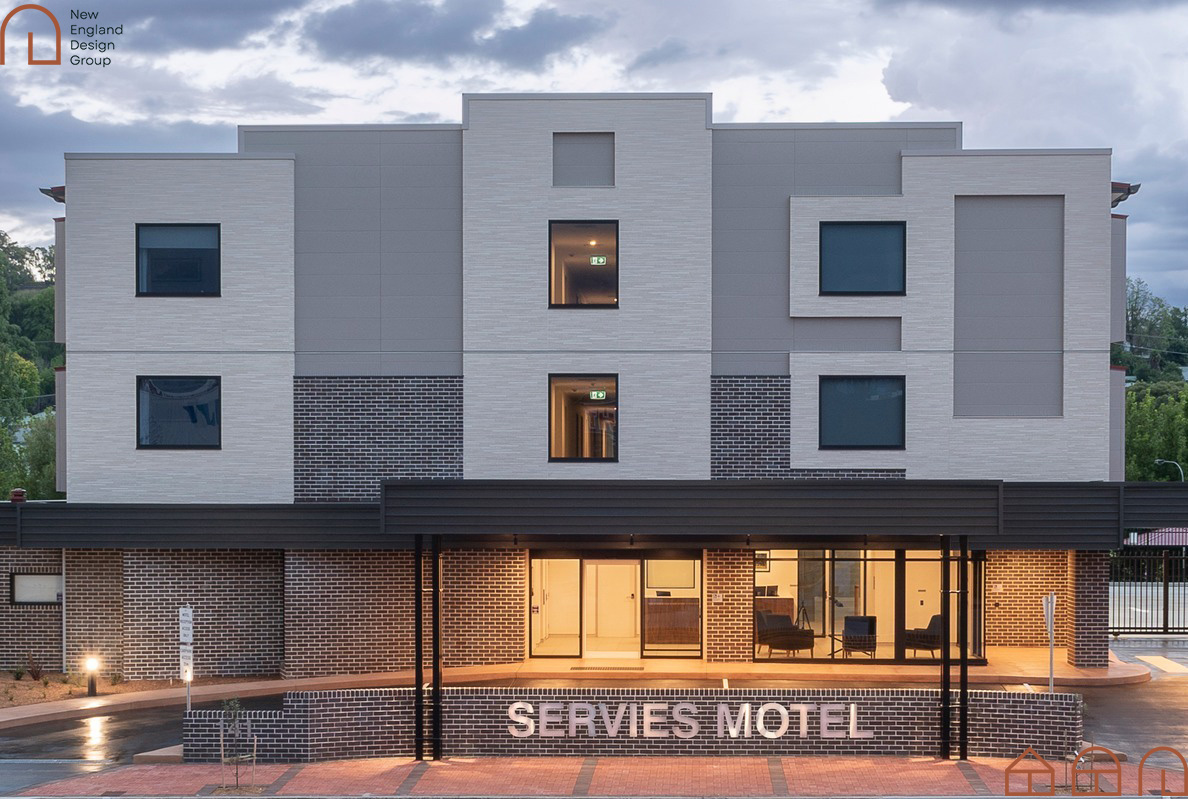
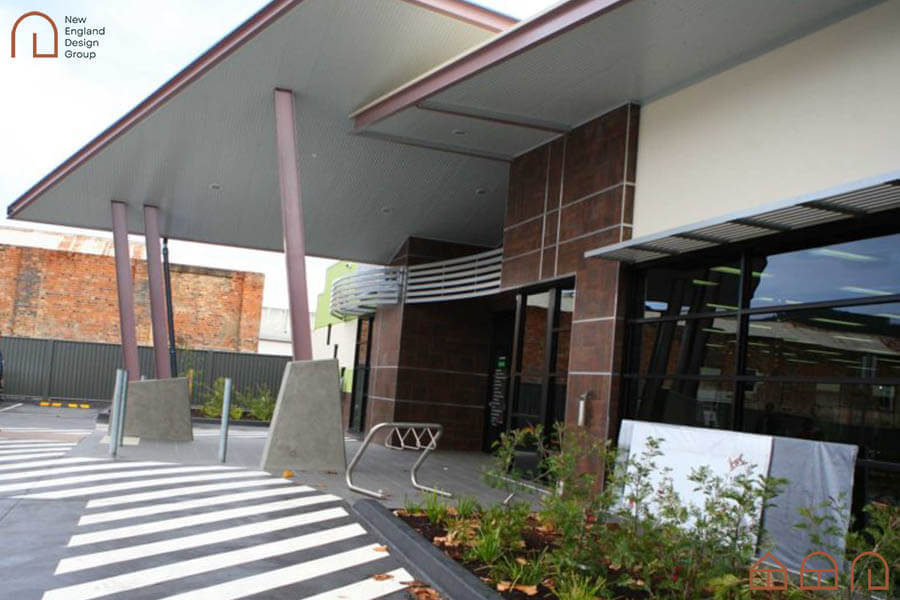
Design Examples